 ॐ
AI Summary
The fifteen days of Pitru Paksha belong to the ancestors, so deva-karya — Bhagavata katha, yajna, new anushthans — is not done in them, and no muhurta for buying new things is given either. In the Shraddh meal, cow’s milk and ghee are best; red tomatoes, black chana, onion and garlic are forbidden. In panchabali the crow, dog, ant and cow all have a share — but food for devatas and ancestors is kept away from a dog’s gaze. Three days of anadhyaya (no study) are observed after the Parvan Shraddh.
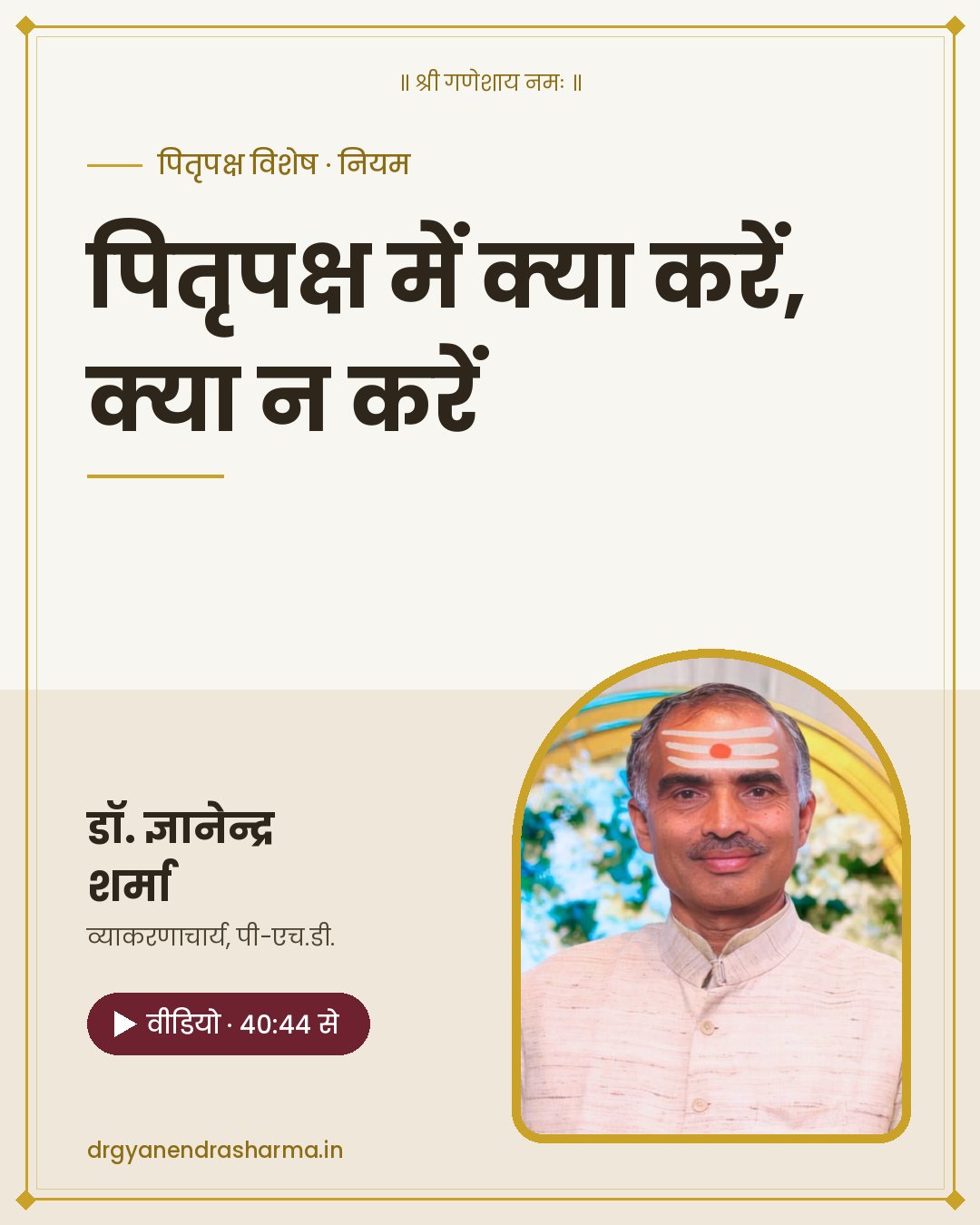
 Video (Hindi) · from 40:44What to do and not do in Pitru Paksha — forbidden food, shopping, the Bhagavata and panchabaliWatch on YouTube →
Key Takeaways
- Deva-karya — Bhagavata, yajna, new japa — is forbidden in Pitru Paksha
- No panchang gives a muhurta in Pitru Paksha, so there is no new shopping
- Red tomatoes, black chana, onion and garlic are forbidden in Shraddh
- In panchabali all have a share — but keep the food of devatas and ancestors from a dog’s gaze
- Three days of anadhyaya after the Parvan Shraddh
What to cook for the Shraddh meal
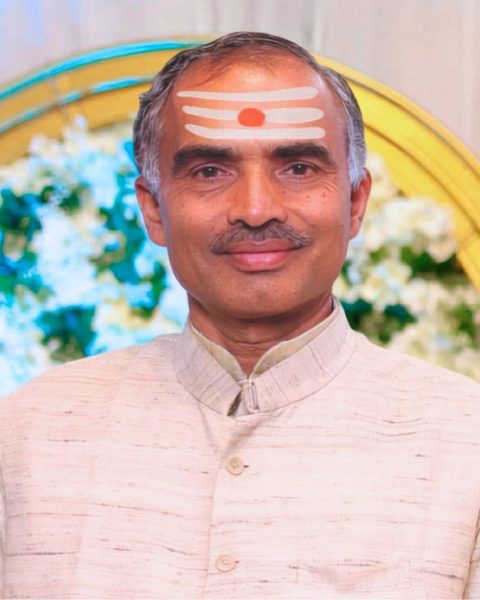
Dr. Gyanendra Sharma explains —
Best: cow’s ghee, cow’s milk, kheer, bottle gourd, pumpkin (kashiphal), parwal, peas, urad.
Forbidden:
- Onion, garlic — and meat, fish and alcohol are out of the question
- Red tomatoes
- Black chana (peas are not forbidden)
- Radish — forbidden in some places, prescribed in others; follow your family’s custom
Black chana and halwa are for the kanya-bhoj of Navratri. There is no rule for feeding young girls in Pitru Paksha.
The fish custom
In some regions there is a custom that a Shraddh is not complete without fish. Dr. Sharma says — in the Kali Yuga this is forbidden. What was done in other yugas does not decide the rule for the Kali Yuga. Lines that are quoted, such as "there is no fault in eating meat", he calls arbitrary verses that have nothing to do with the shastras.
Why new things are not bought
Gold, a vehicle, a house — there is a muhurta for buying anything. No panchang-maker gives a muhurta in Pitru Paksha. When there is no muhurta at all, the question of buying does not arise.
Why no Bhagavata katha or deva-karya
These fifteen days belong to the ancestors — the dark fortnight is the fortnight of the ancestors. Bhagavata katha, yajna, havan, new mantra japa — all these are deva-karya, which is forbidden at this time.
Dr. Sharma also tells Bhagavata reciters to give up these fifteen days. They too have to perform their own Parvan Shraddh, and for three days after it they are not entitled to recite katha.
Panchabali — why the crow?
In Sanatan Dharma everyone is respected and everyone has a share. Among birds the crow was considered the most cunning, yet the shastras gave it a share too. In panchabali food is set aside for the crow, the dog, the ant and the cow — for all. This is a daily rite, in the form of bali-vaishvadeva.
But one caution: feeding a dog is meritorious, but if a dog’s gaze falls on food meant for devatas or ancestors, or if it touches it, that food is fit neither for Bhagavan’s bhog nor for the ancestors. Feed the animals on the street generously — just keep the food of puja and Shraddh separate from them.
While eating
- With shoes on
- Standing
- Several people from one plate
— food eaten this way holds no share for the devatas and ancestors.
Three days after Shraddh
For three days after the Parvan Shraddh one should not eat Shraddh food, and anadhyaya is observed. Dr. Sharma tells of his experience in Banaras — there, great acharyas did not teach for three days after their father’s Shraddh.
This three-day rule is observed after an eclipse, Holi and the Parvan Shraddh.
To read about this subject in detail, see Dr. Gyanendra Sharma’s book Pitru-Karm Shraddh-Mimansa, and the complete guide to Pitru Paksha is here.
*Source — this article is based on a video discussion by Dr. Gyanendra Sharma (video link above, in Hindi). The tithi and muhurta of Shraddh change every year — decide them only after checking with your own panchang and family purohit.*
Listen to Dr. Gyanendra Sharma (in Hindi)from 40:44 in the video · on YouTubeLooking for personal guidance? Get your birth chart analysed.
Book a consultationFrequently asked questions
Which food should not be cooked in Pitru Paksha? +
Onion, garlic, red tomatoes and black chana are forbidden; meat, fish and alcohol are out of the question. Radish is forbidden in some places and prescribed in others — follow your family’s custom.
Why are new things not bought in Pitru Paksha? +
Because there is a muhurta for buying anything, and no panchang-maker gives a muhurta in Pitru Paksha.
Can Bhagavata katha be held in Pitru Paksha? +
No. These fifteen days belong to the ancestors. Bhagavata katha, yajna, havan and new japa are deva-karya, which is forbidden at this time.
Why is food given to the crow in Shraddh? +
In panchabali the crow, dog, ant and cow — all have a share. In Sanatan Dharma every being is respected, so food is set aside for all.
For how many days must rules be kept after Shraddh? +
For three days after the Parvan Shraddh, Shraddh food is not eaten and anadhyaya is observed.