In detail
The Sanadhya family tradition
In this Sanadhya family, to remove the slackness brought by the crooked course of Kali, there came Pt. Shri Vijaydev ji. Having studied the Vedic literature inherited in the family, he performed many kinds of tapas to preserve Brahminhood and followed his dharma. In due time he entered the householder’s ashram and was blessed with Pt. Shri Jawaharlal ji as his son.
येन जवाहरता पूर्वजकीर्तिं परैरभिख्याताम् ।
अन्वर्थमत्र लोके जवाहरेति स्वनाम समकारि ॥
Gist — He who carried the fame of his forefathers swiftly forward and made his name ‘Jawahar’ meaningful in the world.
Among the community of pandits he swiftly gained fame and made his name worthy of his qualities. To make his learning fruitful he composed many texts connected with the life of Bhagavan Shankar, of which the “Markandeya-charit” was the best.
वंशपरम्परयाऽस्मिन्वंशे तेनापि वंशरत्नेन ।
अधिगत्य जन्म विद्या साफल्यमनायि शङ्करस्तवनैः ॥
Gist — Born in this family as its jewel, he made his learning fruitful through hymns to Shankar.
Pt. Shri Jawaharlal ji, a devoted bhakta of Bhagavan Shankar, in course of time fathered Pt. Shri Bhagirath ji. Spreading everywhere his fame, as pure as the Bhagirathi, he won even greater honour than his forefathers.
गङ्गामिव भूमितले सितां स्वकीर्तिं परम्परामेषः ।
विस्तार्य सद्गुणौघैराह्लादितवान्पुरातनख्यातिम् ॥
Gist — Spreading on earth the tradition of his fame, as bright as the Ganga, he brightened the ancient renown further with a host of virtues.
Pt. Bhagirath ji worshipped Bhagavan Shankar and received a boon, in return for which four sons were born to him.
अस्याभवन्नमन्दप्रतिभासम्पन्ननिर्मलस्वान्ताः ।
चत्वारस्ते तनया नयावनद्धस्य लोकविख्याताः ॥
Gist — He had four sons of keen intellect and pure heart, who became renowned in the world.
The four sons were — Jivaram, Kashiram, Asharam and Tikaram. The last of them was Pt. Tikaram ji. The direct line of descent continued from Kashiram ji — his son Pt. Parmanand ji, his son Pt. Homnidhi ji Jyotishacharya, and his son Dr. Gyanendra Sharma (Pathak).
Pt. Tikaram ji
माहाभाग्याज्जगतां समुद्भवं प्राप्य यः सनाढ्यकुले ।
वर्णानवर्णमुख्यान्बाल्ये समये दधार शेमुष्याम् ॥
Gist — Born in the Sanadhya family by the great good fortune of the world, he held the letters in his mind even in childhood.
When childhood had passed, his upanayana samskara was performed according to family custom. Taking initiation into brahmacharya from the family’s hereditary acharya, and carrying the munja girdle, the mekhala, the deerskin, the palasha staff and the kamandalu, he set out on the road to his guru’s home.
संस्कारोत्तरकालं गुरोरनुज्ञां शिरस्यवस्थाप्य ।
यः पाणिनीयशास्त्रं समग्रमध्यैष्ट विस्तृतप्रज्ञः ॥
Gist — After the samskara, bowing to his guru’s command, he of wide intellect studied the entire Paninian shastra.
First of all he studied Paninian grammar. After this he went to Mathura and studied the Mahabhashya under his revered guru Pt. Yugalkishore ji — the chief acharya of the Nimbarka Sampradaya. Then he went to Kashi and studied Vedanta under Vishwaroop Swami ji, and at Shantipur in Navadvip he studied both the new and the ancient schools of Nyaya under Shri Taranath Tarkavachaspati. Having completed the study of the Vedangas, he studied Yaska’s Nirukta to enter Vedic literature. He studied in Kashi ancient sage-composed texts such as the Pingala Chhandah-sutra and the Kavyalankara-sutra, with their complete indices. After that he began the svadhyaya of the Vedas.
Having grasped the secret of the Vedic principle that is the very body of sound, he chose to live in Bharatvarsha in the manner of a muni. Content with only a loincloth and with food received as alms, he spent most of his life on the bank of the Ganga. Devoted to the vow of non-possession, he lived only on grain received from Brahmins. Considering the keeping of cows essential for Brahmins, he always kept a cow with him, which he worshipped as soon as he rose in the morning. Thinking it hard to restrain the mind while living in cities, he chose to live beneath trees.
He made the wealth he received from visiting well-wishers meaningful by distributing it among the poor. The wealth he received from the King of Nepal at Prayag he likewise distributed at once among Brahmins. Holding that the mother tongue of those born in his home should be the language of the gods, he chose always to converse only in Sanskrit. Travelling with the wish to see the land, he went to the desert country, where even well water was scarce, and there did all his bathing and other daily tasks with Ganga water alone. Everywhere he spread only the Advaita principle taught by the Vedic mantras and affirmed by the Vedanta darshana.
यः पुण्यपत्तनस्थं विद्वद्वृन्दं विजित्य सद्वादे ।
तत्रत्यमानवानां मनांसि जग्राह सच्चरित्रेण ॥
Gist — Having defeated the assembly of scholars of Punyapattan (Poona) in shastrartha, he won the hearts of the people there by his good character.
At Poona a very notable shastrartha took place with him on whether Brahminhood depends on region or not. Staying three days at the home of Shri Gokuldas in Mumbai, he gained wide renown through Pt. Gattulal ji Maharaj. He was married to Smt. Subuddhi Devi, a highly learned lady, daughter of Pt. Tulsiram ji of Secunderabad.
गङ्गातटे मुहूर्ते ब्राह्मे मूर्धप्रदेशविवरेण ।
यल्लीलासंवरणं पुत्रस्याङ्के बभूव भाग्येन ॥
Gist — On the bank of the Ganga, in Brahma muhurta, seated in his son’s lap, he concluded his earthly play through the crown of the head.
At Karnavas on the bank of the Ganga, on Magha Shukla Ekadashi in Brahma muhurta, seated in the lap of his eldest son, he left his body. He passed away in Vikram Samvat 1958.
Pt. Akhilanand Sharma ji
ऋषिवह्निनन्दसोमैर्विरुद्धगत्या समन्विते वर्षे ।
मज्जन्म चन्द्रनगरे समभून्माघे सिते तृतीयायाम् ॥
Gist — He was born in Chandranagar on the Tritiya of the bright fortnight of the month of Magha.
Pt. Tikaram ji and Smt. Subuddhi Devi were going to their village, Chandranagar. Near Anupshahar, in the forest of Avantika Devi (Ahar), in the shade of a tree near the Ganga, at an auspicious lagna, mother Subuddhi gave birth to the child — Vikram Samvat 1937, Magha Shukla Tritiya, Tuesday, Shatabhisha nakshatra, Parigha yoga, Gara karana. Obeying her husband, she went on with the journey; returning on the third day, moved by a mother’s love, she went to that same tree. The child was joyfully bringing his toe to his mouth with his hands and gurgling. Pt. Tikaram ji came, saw him and said — no one can harm a hair of his head; he will be an eminent scholar of Sanatan Dharma.
When he was one year old, his father took him to Kashi for darshan of Vishwanath ji. When he was three, in Mumbai, Pt. Gattulal ji called him “trivārṣikaḥ paṇḍitaḥ” — a three-year-old pandit — and blessed him to become a poet. His mother tongue was Sanskrit. At the age of four his father taught him to write letters with his finger in the sand on the bank of the Bhagirathi. In his fifth year his father himself performed his upanayana samskara at Gangotri. After this he studied grammar and Veda at Karnavas under his eldest uncle Pt. Jivaram ji; the Ashtadhyayi and Mahabhashya at Mathura under Pt. Yugalkishore ji; and literature at Anupshahar under Pt. Vishnudatt ji. Going to Avantika, the family goddess, he received both mantric and tantric initiation. When he was twenty-two his father passed away; to fulfil his father’s command he studied for three more years.
नास्तिकतामुखमर्दनदक्षत्वान्नास्तिकग्रन्थान् ।
दृष्ट्वा तत्परिमर्दनमूला बहवो विनिर्मिता ग्रन्थाः ॥
Gist — Having seen the texts of the nastikas, he composed many texts with their refutation at the root.
विजिताः परःसहस्रा नास्तिकवर्याः सनातनं धर्मम् ।
रक्षितुमेव न दर्पाद्दिक्कृतत्वं द्वन्द्वतरे न्यस्तम् ॥
Gist — All this was done only to protect Sanatan Dharma, not out of pride.
He was married at Anupshahar to Smt. Malti Devi, daughter of Pt. Gangaprasad ji. He wrote 122 texts, large and small, with more than one lakh verses, and held more than five hundred shastrarthas in defence of Sanatan Dharma. The first of Pt. Tikaram ji’s children was Akhilanand ji, after him his sister Shanti Devi and his younger brother Pt. Subodhchandra ji. Pt. Akhilanand ji had three sons — Yagyesh, Munishwar and Naresh.
Chandranagar (Chandunagla), Gunnaur, Budaun
तच्चन्द्रनगरमस्मिँल्लोके धन्यं किमत्र वक्तव्यम् ।
यस्मिन्नसौ गुणाढ्यः सनाढ्यवर्यो जनिं शिवामापत् ॥
Gist — Blessed in this world is that Chandranagar — what more need be said — in which that foremost of the Sanadhyas, rich in virtues, took his auspicious birth.
That Chandranagar, in the area of Gunnaur tehsil of Budaun district — today Chandunagla — is most worthy of gratitude, for in its sacred soil the great men of this family were born. This is the village to which the tradition of this family is tied.
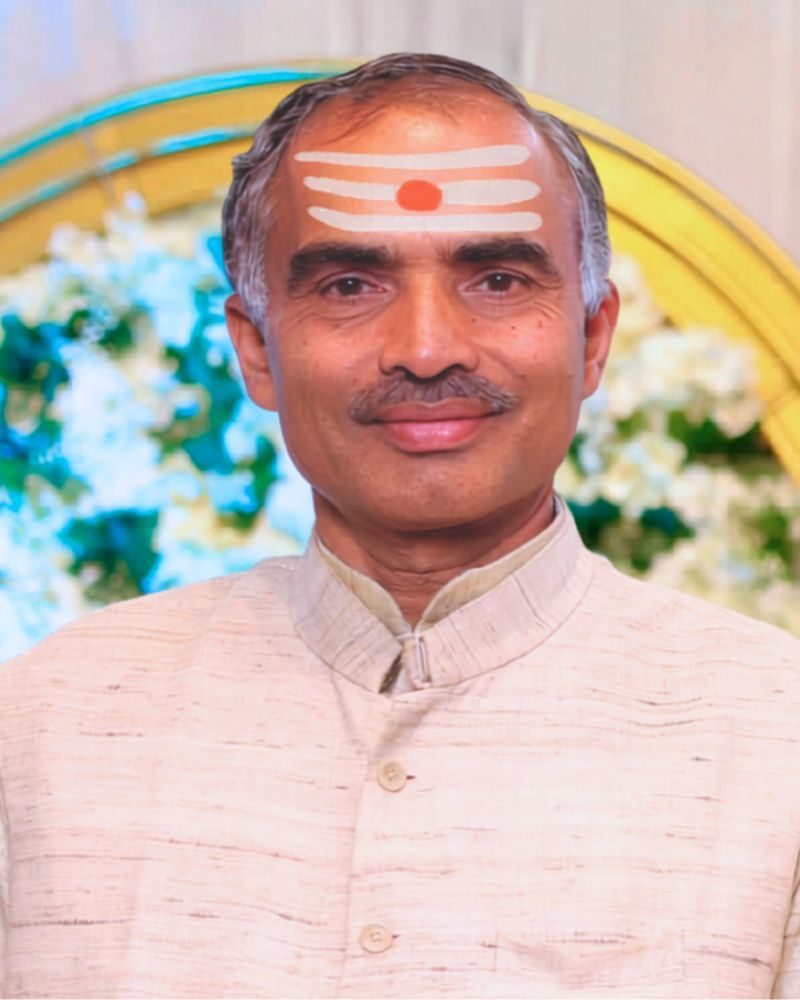
Dr. Gyanendra Sharma
काशीराम विपश्चितोऽथ विमलो जातः सुतश्चाग्रणीः ।
वंशस्यास्य विभासकोऽपि परमानन्दाभिधः सन्मतिः ॥
तत्पुत्रा कुलदीपकाः समभवन् रामस्वरुपोऽग्रतः ।
श्रीमद् होमनिधिस्ततश्च सुमति श्री चन्द्रहंसाभिधः ॥
Gist — The learned Kashiram ji had a pure and foremost son, Parmanand, who brought lustre to this family. He had three sons, lamps of the family — the eldest Ramswaroop, then Shriman Homnidhi, and the youngest Shri Chandrahans.
लोकप्राप्य विभूतिराजदखिलानन्दस्य शुद्धान्वये ।
श्रीमद् होमनिधेस्त्रयश्चतनया धर्मेन्द्र नामादिमः ॥
ज्ञानेन्द्रः सुरभारती रसलसद्भा भरैर्भ्राजितः ।
सत्येन्द्रश्च विचक्षणः सुरगिरामध्यापने तत्परः ॥
Gist — In the pure lineage of Pt. Akhilanand ji, Shri Homnidhi Jyotishacharya had three sons — the first Dharmendra Pathak; the second Gyanendra Sharma (Pathak), Vyakaranacharya, Ph.D., adorned with the radiance of Sanskrit; and the third Satyendra Pathak, devoted to teaching Sanskrit.
Dr. Gyanendra Sharma (Pathak) devoted himself especially to the deep study of and research in Sanskrit grammar and received the degree of Ph.D. Along with the Sanskrit language and the shastras, he has also had a deep connection with the study and contemplation of jyotish shastra and with the traditional system of knowledge. Thus in his personality one sees a meeting of the traditions of Sanskrit literature, grammar and the study of jyotish shastra.
This account of the family is based on the Sanskrit author’s introduction in a text by Pt. Akhilanand Sharma and on family records.