Tradition
To understand the Sanatan religious traditions and carry them forward with respect.
Dharma Tradition Sadhana Seva
An effort to carry the traditions of Sanatan Dharma, the shastric methods of puja and the spirit of service into modern times.
A glimpse
On pressing, the video will play from YouTube.
Harihar Swami
Karpatri Dharmarth Trust
Harihar Swami
Karpatri Dharmarth Trust
02 · The Trust
The aim of the Harihar Swami Karpatri Dharmarth Trust is to carry forward, with respect, the religious traditions, methods of puja, shastric study and spirit of service of Sanatan Dharma.
A very large part of dharma today runs only on hearsay. Which rite is done by which method, what the shastra says behind it, and where the shastra is silent — this distinction is slowly fading. The Trust’s effort is to make this distinction clear again.
It is with this view that the book “Pitru-Karm Shraddh-Mimansa” was presented — a work focused on answers from the shastras to questions on pitru-karm, the method of Shraddh and related matters. No fear anywhere, no claims of miracles anywhere; only what is in the shastras, with references.
Wherever an anushthan is performed, the method, the sankalp and the purpose — all three are explained clearly to the yajman in advance. This is the root of our way of working, not an extra facility.
03 · Vision
To understand the Sanatan religious traditions and carry them forward with respect.
To understand the shastric basis behind puja, vrat, anushthan and conduct.
To join the spirit of service to dharma, according to the needs of society.
04 · Anushthan
Sankalp with shraddha. Anushthan with method. Participation with service.
The prescribed method of puja, with Shiva upasana and sankalp.
Learn moreWorship of the Parthiv Shivling and the related religious method.
Learn moreDevi upasana and anushthan according to the prescribed tradition.
Learn moreThe religious anushthan related to entering a new home.
Learn moreRemembrance of the ancestors and the traditional religious method.
Learn moreAnushthans available according to a special religious occasion or sankalp.
Learn more05 · Spirit
Puja is not merely a service.
That is why it is necessary to understand the method, the sankalp, the chanting of mantras and the religious purpose behind every anushthan.
06 · Process
The yajman’s necessary information and sankalp — name, gotra and the purpose for which the anushthan is being performed.
Preparation of the method of puja and the necessary materials. The date is fixed after speaking with the yajman.
The puja is completed according to the prescribed method and chanting of mantras.
Where the facility is available, the yajman can join live. Photos and videos of the anushthan are sent.
07 · Study
Asking questions is not a lack of faith. Tradition stays alive for those who want to understand it.
08 · Guidance
Sanatan Dharma · Shastra · Spiritual guidance
Seven generations — shastra, scholarship and jyotish
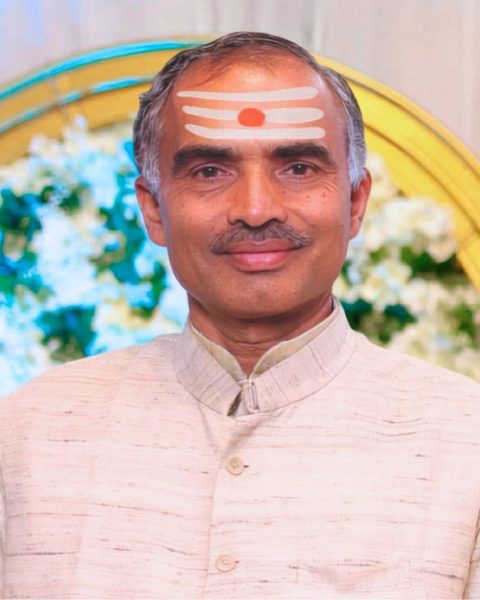
Dr. Gyanendra Sharma is a student of the Sanatan shastras. He is the author of the book “Pitru-Karm Shraddh-Mimansa” — a work focused on answers from the shastras to questions on Pitru Dosh and Shraddh, presented by the Harihar Swami Karpatri Dharmarth Trust.
He has taken part in various spiritual, cultural and social programmes. His view is simple — what is in the shastras should be said in clear words; and where the shastras are silent, one should remain silent.
09 · Transparency
That is why information about the Trust, the process of the puja and the payment arrangement are kept as clear as possible.
Harihar Swami Karpatri Dharmarth Trust (हरिहर स्वामी करपात्री धर्मार्थ ट्रस्ट) — this is the official name.
Which anushthan will be performed, by which method and on which date — all this is explained clearly before the sankalp.
The amount of dakshina and what it includes are settled in advance by talking. No hidden charges.
Photos and videos of the puja are sent to the yajman. No assurance is given for any arrangement that is not available.
10 · Participation
The dakshina is set according to the nature of the anushthan. That is why it is necessary to talk before participating — so that the method, the date and what is included are clear to you in advance.
Anushthan
Special occasion
The dakshina of each anushthan differs according to its method and duration — which is why it is not written here but told when we talk.
11 · Sankalp
The Trust’s sankalp is to gradually take service forward in these directions alongside religious work. As the work begins, information about it will be given clearly right here.
These are the directions of the Trust — they are not being presented as ongoing programmes. To claim work that has not begun is against tradition.
12 · The way ahead
Tradition does not mean only remembering the past, but also carrying its essential spirit to the generations to come.
The meaning with which a rite was performed a hundred years ago is the same meaning today — only the language in which it is told has changed. The Trust’s effort is that this meaning should not be lost: if there is an anushthan, let it be with the method; if there is a question, let it be with the shastra; and if there is service, let it be without any display.
This work will not be completed in any one generation. That is why it is right to do it slowly and properly.
13 · FAQ
The sankalp is the beginning of the anushthan. In it the yajman’s name, gotra and the purpose for which the puja is being done are clearly stated. This information is taken first, and the puja begins accordingly.
The yajman’s name, gotra and the purpose of the sankalp. If the gotra is not known, tradition provides an alternative — so it does not become an obstacle.
Yes. Where the facility is available, the yajman can join live at the time of the anushthan. The time is fixed in advance, and you join from this very page — the address never changes, so save it once.
Photos and videos of the anushthan are sent to the yajman. There is at present no arrangement to send prasad by post — so no such assurance is given.
At present, participation is arranged by contacting directly — by phone or WhatsApp. The amount of dakshina, the date of the anushthan and what it includes are all made clear in advance by talking.
The date is decided according to the nature of the anushthan and the traditional method. No date is taken as fixed without speaking to the yajman.
Yes. For a special religious occasion or a personal sankalp, we talk first, and only then is it decided in what form it is possible within the shastric method.
Religious anushthans are performed according to the shastric method and with shraddha. No claim of guaranteeing any particular worldly result is made.
Sankalp, date and dakshina — all three are made clear in advance by talking.