 ॐ
AI Summary
Ekadashi is the eleventh tithi of every fortnight, dedicated to Bhagavan Vishnu. There are 24 Ekadashis in a year (26 with an Adhik Maas). The fast runs from the evening of Dashami to the parana on Dwadashi; grain — especially rice — is forbidden and phalahar is acceptable. Break the fast on Dwadashi, after Hari Vasar and before Dwadashi ends. The sick, pregnant women and the elderly can keep the spirit of the fast in a simple form — devotion is what matters, not bodily suffering.
Key Takeaways
- Ekadashi is a tithi dedicated to Bhagavan Vishnu — two in every month, 24 in a year (26 with an Adhik Maas).
- The basic rule of the fast: giving up grain (especially rice), sattvic conduct and remembrance of Vishnu.
- The fast begins on the evening of Dashami and is completed with the parana on Dwadashi.
- Check the time of parana in the panchang — parana during Hari Vasar is forbidden.
- A strict fast is not compulsory for the sick, pregnant women, children and the elderly — the shastras themselves give alternatives.
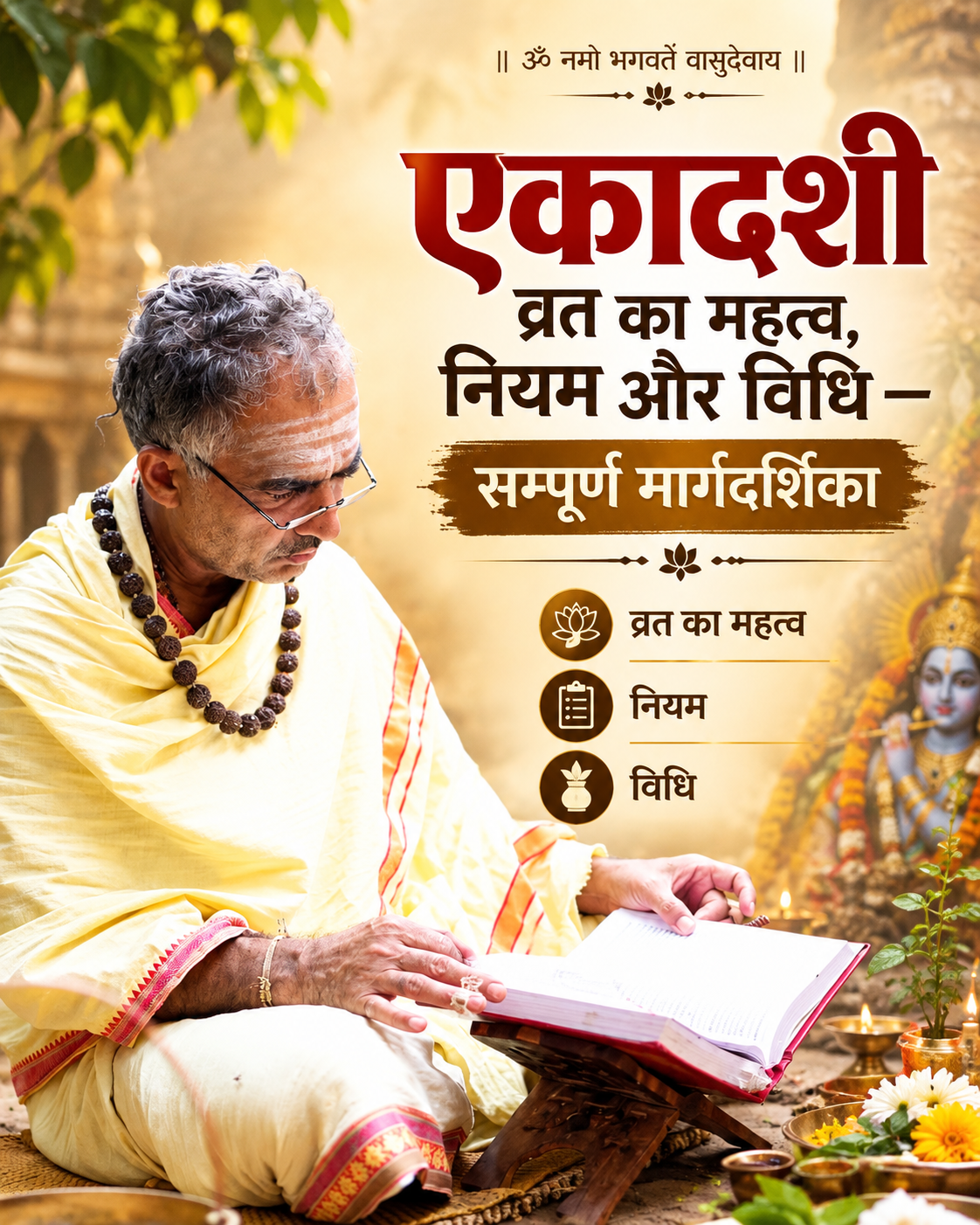
If any one fast in the Sanatan tradition is called "the king of fasts", it is Ekadashi. The Padma Purana, Skanda Purana and Bhavishya Purana contain separate chapters on the greatness of Ekadashi. But today many people keep this fast only out of tradition — without knowing its why and how. This article will give you a complete understanding of Ekadashi: its significance, names, rules, method and parana — all on the basis of authentic sources.
What is the Ekadashi fast?
The eleventh tithi of each fortnight (bright and dark) of the lunar month is called Ekadashi. This tithi is considered dear to Bhagavan Vishnu, which is why it is also called "Hari Vasar" or "Hari Din". On this day there is a tradition of purifying both body and mind through fasting, japa, kirtan and sattvic conduct.
Seen from a modern point of view, a fortnightly fast gives rest to the digestive system and trains the mind in restraint — this is why Ekadashi is called an excellent fast on both the spiritual and practical levels.
Why is the Ekadashi fast observed?
According to the Padma Purana, the Ekadashi tithi is the form of the goddess "Ekadashi", who appeared from the power of Bhagavan Vishnu himself and put an end to the asura named Mura. Pleased, Bhagavan granted the boon that the devotee who fasts on this tithi and remembers Hari will have his sins diminished and will attain devotion and liberation.
एकादशी समं किञ्चित् पापत्राणं न विद्यते। — the idea stated in the Puranas: there is no other (fast) that protects from sin like Ekadashi
The deeper purpose of the fast is restraint of the senses. Turning the eleven senses (five of knowledge, five of action and the mind) away from enjoyment for one day and towards Bhagavan — that is the spiritual meaning of ‘Ekadashi’.
What are the names of the 24 Ekadashis of the year?
Each Ekadashi has its own name, story and special fruit (according to the purnimant panchang):
| Month | Dark fortnight | Bright fortnight |
|---|---|---|
| Chaitra | Papmochini | Kamada |
| Vaishakh | Varuthini | Mohini |
| Jyeshtha | Apara | Nirjala |
| Ashadh | Yogini | Devshayani |
| Shravan | Kamika | Putrada (Shravan) |
| Bhadrapad | Aja | Parivartini (Padma) |
| Ashwin | Indira | Papankusha |
| Kartik | Rama | Dev Uthani (Prabodhini) |
| Margashirsha | Utpanna | Mokshada |
| Paush | Saphala | Putrada (Paush) |
| Magh | Shattila | Jaya |
| Phalgun | Vijaya | Amalaki |
In an Adhik Maas (Purushottam Maas) two extra Ekadashis come — Padmini (bright) and Parama (dark). The period from Devshayani to Dev Uthani is called Chaturmas, during which marriages and other auspicious events are traditionally postponed.
What are the rules of the Ekadashi fast?
The fast actually begins from the evening of Dashami. The main rules:
- On Dashami: eat a sattvic, light meal; avoid tamasic foods (garlic, onion, meat) and excess salt.
- Giving up grain: on Ekadashi, eating grain — especially rice — is considered forbidden. According to tradition, eating rice on this day is prohibited.
- Phalahar is acceptable: fruit, milk, curd, makhana, sabudana, singhara/kuttu flour, groundnuts, rock salt.
- Conduct: the rule is to avoid untruth, anger, slander and sleeping in the daytime; observe brahmacharya.
- Remembrance: japa of "ॐ नमो भगवते वासुदेवाय", or reciting the Vishnu Sahasranama or the Gita, is very auspicious.
- Tulsi: be sure to offer tulsi leaves in the worship of Vishnu, but plucking tulsi on Ekadashi is forbidden — pick them a day before.
The method of the Ekadashi fast (step by step)
- Morning: rise in Brahma muhurta and bathe; wear clean clothes and take the sankalp of the fast.
- Worship: perform panchopachara/shodashopachara puja of Bhagavan Vishnu (or your chosen form — Laddu Gopal, Ram, Narayan) — water, flowers, incense, lamp, naivedya and tulsi leaves.
- Katha: read or listen to the katha of that day’s Ekadashi — the katha of each Ekadashi tells its special fruit.
- Through the day: fast or take phalahar as you are able; spend time in japa, kirtan, satsang or religious study.
- Evening: light a lamp and do aarti; if possible, keep a night vigil with sankirtan of Hari’s name.
- Parana on Dwadashi: after bathing and worship, give daan to a Brahmin or someone in need as you are able, then take grain at an auspicious muhurta and complete the fast.
What is the right time for parana?
Three shastric rules of parana (breaking the fast):
- Do the parana only on the Dwadashi tithi — parana after Dwadashi has passed is considered faulty.
- Do the parana only after sunrise.
- Do not do the parana during Hari Vasar — the first quarter of Dwadashi; this period is for worship and remembrance.
The parana muhurta of every Ekadashi is different, so it is best to check the local panchang. If there is doubt in deciding the tithi (for example, if Ekadashi appears on two days), the decision may differ in the Smarta and Vaishnava traditions — in such a case it is right to ask a scholar.
Who is exempt from the fast?
Sanatan Dharma teaches discernment, not harshness. The shastras are clear that the sick, pregnant women, small children and the very old are free from a strict fast. They can adopt any of these forms:
- Only giving up rice, with normal sattvic food;
- Eka-bhukta — phalahar or a meal once a day;
- Only a mental fast — japa, recitation and sattvic conduct.
On Nirjala Ekadashi (Jyeshtha Shukla) not even water is taken — this is only for people in full health. In matters of health, keep the doctor’s advice above all; Bhagavan hungers for devotion, not for suffering.
Which Ekadashis are considered the most important?
- Nirjala Ekadashi: the hardest — it is believed that this one fast gives the fruit of all the Ekadashis of the year.
- Devshayani Ekadashi: the tithi on which Bhagavan Vishnu enters yoga-nidra — the beginning of Chaturmas.
- Dev Uthani (Prabodhini) Ekadashi: the tithi on which Bhagavan awakens — with it, marriages and other auspicious events begin again; the festival of Tulsi Vivah.
- Mokshada Ekadashi: on this tithi at Kurukshetra Bhagavan Shri Krishna gave Arjuna the teaching of the Shrimad Bhagavad Gita — it is celebrated as Gita Jayanti.
- Putrada Ekadashi: considered especially fruitful for the wish for children.
Ekadashi is closely connected with the muhurtas of auspicious events — also read our article What is Manglik Dosh?. For answers from the shastras to questions on pitru-karm and Shraddh, Acharya ji’s eBook Pitru-Karm Shraddh-Mimansa is available.
Looking for personal guidance? Get your birth chart analysed.
Book a consultationFrequently asked questions
What can be eaten during the Ekadashi fast? +
In phalahar, fruit, milk, curd, sabudana, singhara or kuttu flour, makhana, groundnuts and rock salt are considered acceptable. Grain — especially rice — is forbidden. You may take water, coconut water and tulsi water. On Nirjala Ekadashi even water is not taken, but this is only for people in full health.
When should the Ekadashi fast be broken (parana)? +
It is in line with the shastras to break the fast on the Dwadashi tithi, after sunrise and before Dwadashi ends. Parana should not be done during Hari Vasar (the first quarter of Dwadashi). It is best to follow the parana muhurta given in the local panchang.
Can the sick, pregnant women and the elderly keep the Ekadashi fast? +
The shastras themselves say that a strict fast is not compulsory for the sick, pregnant women, children and the very old. They can keep the spirit of the fast in a simple form such as phalahar, eka-bhukta (one meal a day) or only giving up rice. The feeling of devotion is what matters, not causing the body suffering.
How many Ekadashis are there in a year? +
Two in every month — of the bright and the dark fortnight — making 24 Ekadashis in a year. In a year with an Adhik Maas (Purushottam Maas), with Padmini and Parama the number becomes 26.