 ॐ
AI Summary
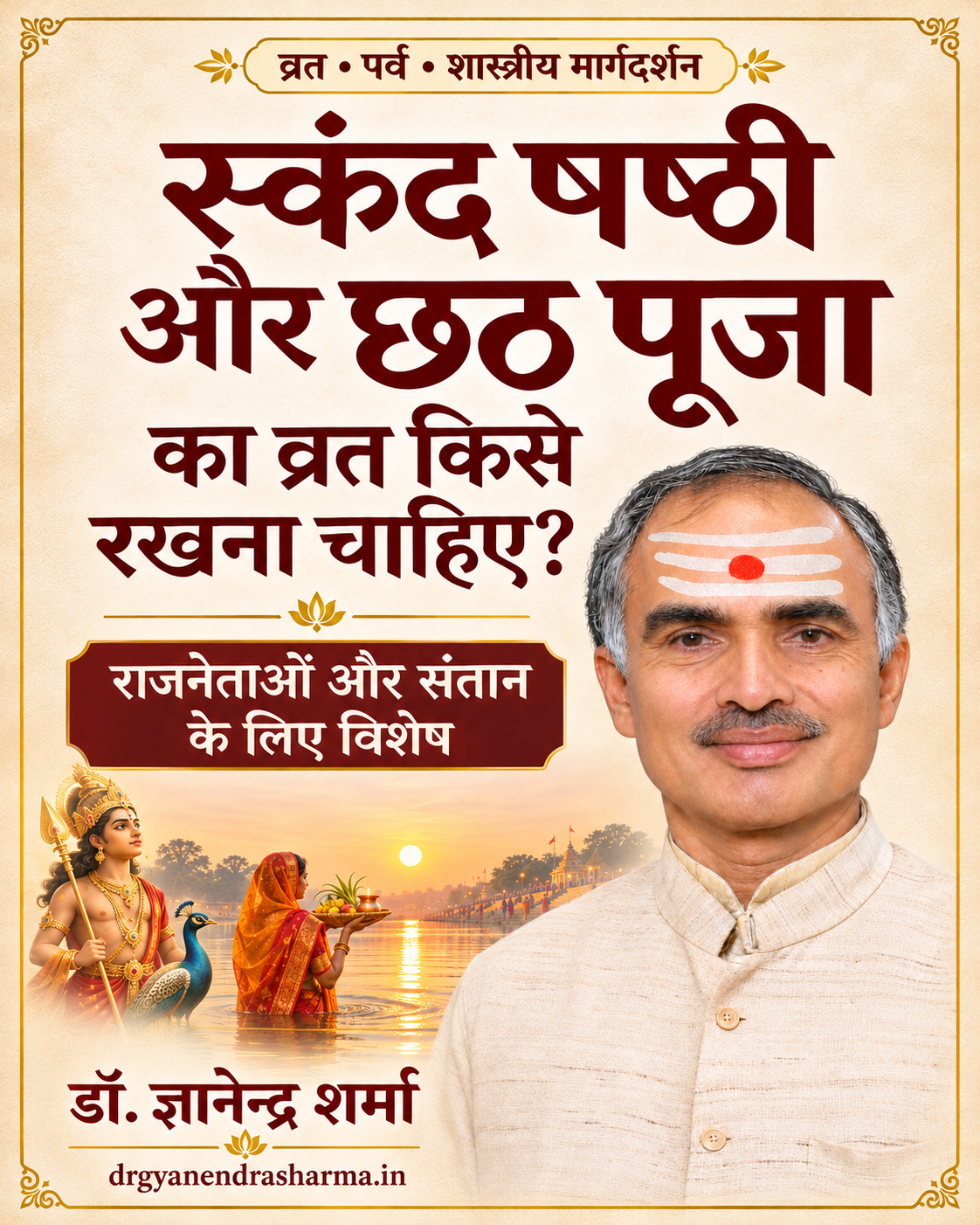
On Kartik Shukla Shashthi, North India celebrates Chhath and the South celebrates Skanda Shashthi — both rooted in the worship of Shashthi. In the Bhavishya Purana, Shri Krishna taught this vrat to Yudhishthira after he lost his kingdom, so it is special for those seeking victory, position or a lost authority. Shashthi Devi protects children, making this the best tithi for wishes related to progeny. This article gives the Vratraj method, the arghya mantra and the Pragya Vivardhan Stotra.
Key Takeaways
- Skanda Shashthi 2026: Sunday 15 November; parana on 16 November (Saptami)
- Skanda Shashthi is taken Panchami-viddha and concluded on Saptami
- The shastra asks one who has lost his position to keep stricter rules
- Shashthi Devi (Chhathi Maiya) presides over children and grants them
- Fruit in the day, or grain once at night if unable; no oil
- The Pragya Vivardhan Stotra is recited in the morning for wisdom and speech
The vrat of Kartik Shukla Shashthi is for anyone who seeks the happiness and protection of children, anyone who wants position, prestige or a lost authority back, and anyone who seeks strength of intellect and speech. In North India this tithi is celebrated as Chhath Mahaparv, and in South India as Skanda Shashthi (Soorasamharam). Both rest on the same Shashthi tithi.
In the Bhavishya Purana, Lord Shri Krishna taught this vrat to King Yudhishthira when he had lost his kingdom. That is why the shastra links this vrat especially to kingship, victory and authority. Shashthi Devi is the protector of children, so this tithi is also considered most important for progeny.
Dates in 2026
As per the panchang, Chhath Mahaparv runs from 13 to 16 November 2026, and Skanda Shashthi falls on Sunday, 15 November 2026.
| Day | Date | Observance |
|---|---|---|
| Friday | 13 November 2026 | Nahay-Khay (first day of Chhath) |
| Saturday | 14 November 2026 | Kharna |
| Sunday | 15 November 2026 | Kartik Shukla Shashthi: evening arghya of Chhath and the Skanda Shashthi vrat |
| Monday | 16 November 2026 | Morning arghya, parana (Saptami) |
Sunrise and tithi timings differ slightly by city, so check the exact time of arghya in your local panchang.
Skanda Shashthi and Chhath: one tithi, two traditions
Both fall on Kartik Shukla Shashthi, and both centre on the worship of Shashthi. The only difference is that one tradition gives primacy to Lord Skanda (Kartikeya), and the other to Surya Dev and Chhathi Maiya.
Skanda Shashthi: On this tithi Swami Kartikeya was given command of the army of the devas and attained Vijayalakshmi. In South India the same day marks Lord Murugan's victory over Shurapadma (Soorasamharam).
Chhath Mahaparv: In Bihar, Jharkhand, eastern Uttar Pradesh and the Terai of Nepal, arghya is offered to the setting sun on this day and to the rising sun the next morning. The one called "Chhathi Maiya" in folk tradition is Shashthi Devi of the shastras.
The bridge between the two — Shashthi Devi (Devasena): In the Prakriti Khanda of the Brahmavaivarta Purana, Shashthi Devi is described as the sixth part of Mula Prakriti, the presiding deity of children, and Devasena, the consort of Skanda:
षष्ठांशा प्रकृतेर्या च सा च षष्ठी प्रकीर्तिता।
बालकाधिष्ठातृदेवी विष्णुमाया च बालदा॥
Meaning — She who is the sixth part of Prakriti is called Shashthi. She is the presiding deity of children, Vishnumaya, and the giver of children.
Those who keep the Chhath vrat may also offer arghya to Skanda and recite the Pragya Vivardhan Stotra. Keep your family tradition as it is; this adds to it and does not replace it.
Scriptural basis: Vratraj
The Vratraj gives the Skanda Shashthi vrat of the Bhavishya Purana, based on Hemadri's Chaturvarga Chintamani. In summary, it says:
- Skanda Shashthi should be taken when joined with Panchami (Panchami-viddha), and the vrat is concluded on Saptami.
- Shri Krishna told Yudhishthira that fruit alone should be eaten on every Shashthi, and especially in Kartik. One who has lost his kingdom, as Yudhishthira had, should keep even stricter rules, and the kingdom returns soon.
- A king desiring victory should fast on this day every year, because on this Shashthi Kartikeya became commander of the devas and attained Vijayalakshmi.
- Arghya with akshat, water and flowers is to be offered to Kartikeya facing south, with the one-and-a-half-shloka mantra beginning "Saptarshidaraja".
- Uncooked grain, ghee, sugar and vegetables are to be given to a worthy brahmin, and fruit is eaten at night with the earth itself as the plate.
- Whoever keeps this vrat on the Shashthi of either fortnight with brahmacharya and detachment from indulgence gains siddhi, dhriti (freedom from anxiety), pushti, rajya (independence and authority) and a life free of disease.
- One who cannot fast may eat grain at night; food made with oil is to be avoided.
The full Hindi text from Vratraj is given in the Hindi version of this article.
Who should observe this vrat?
Every person — man or woman, householder or brahmachari — is entitled to the Shashthi vrat. The Bhavishya Purana, however, points to six kinds of people in particular:
| For whom | Why | Scriptural basis |
|---|---|---|
| Politicians, administrators, those seeking office | The fruit of rajya, victory and authority | "A king desiring victory should fast on this day every year" |
| Those who have lost their position | Stricter rules to regain what was lost | "One who has fallen from his kingdom should keep even more rules" |
| Couples and parents desiring children | Shashthi Devi presides over children and grants them | Brahmavaivarta Purana, Prakriti Khanda |
| Students, speakers, teachers | Wisdom, memory and power of speech | Phalashruti of the Pragya Vivardhan Stotra |
| Army, police and security personnel | Kartikeya is the commander of the devas | "Devasenani" in the arghya mantra |
| Those suffering illness or an unsteady mind | Dhriti, pushti and a disease-free life | Phalashruti of Skanda Shashthi |
Special for politicians and those seeking position
This vrat was originally taught to a king to regain his lost kingdom. Today the place of the king is taken by elected representatives, administrators and leaders of organisations.
- Candidates and elected representatives
- Those who have lost an election, a post or a party ticket — the shastra asks them to keep stricter rules
- Administrators and leaders of institutions and businesses
- People serving in the army, police and security services
What the shastra points to: the phalashruti defines rajya as "independence and authority over others", and pairs it with dhriti — never being shaken. In public life, composure in a crisis matters as much as position. The discipline of fruit, brahmacharya and restraint builds exactly this.
The jyotish view: On this tithi two powers are worshipped together. Surya, worshipped in Chhath, signifies royal favour, authority and the father. Kartikeya is regarded as the presiding deity of Mangal, the planet of courage, leadership and struggle. For those with a weak Sun or Mars in their chart, this day is considered especially meaningful.
To be clear: the vrat does not guarantee any election result. The shastra itself says it should be kept "every year" — it is a sustained practice, not a one-day remedy. Its full fruit comes when it is joined with action, ethics and public service.
Special for children
Shashthi Devi grants children and protects infants, so this tithi is considered the best for every wish related to children. That is why the newborn's "Chhathi" on the sixth day after birth is a time to worship Shashthi Devi.
The story in brief: The Brahmavaivarta Purana tells of King Priyavrata, son of Svayambhuva Manu. After a putreshti yajna his son was stillborn. In that moment of grief Shashthi Devi appeared, gave the child life, and the king established her worship in his kingdom.
- Couples who wish for a child
- Parents whose children fall ill often
- Parents whose children struggle with studies or speech — along with the Pragya Vivardhan Stotra
- All parents wishing for their children's protection, long life and bright future
The jyotish view: Progeny is judged from the fifth house and Jupiter, the karaka of children. Where the fifth house is afflicted, its lord is weak, or there are Mars-related doshas, worship of Kartikeya and Shashthi Devi is traditionally considered fitting. Decide on a remedy only after consulting a learned astrologer about your own chart.
Vrat and worship are a path of faith, not a substitute for medical care. For any health issue related to children, a doctor's advice and treatment should continue alongside.
How to observe the vrat (as per Vratraj)
- Sankalp: bathe in the morning on Shashthi and take the vow of the Skanda Shashthi vrat.
- Food: eat only fruit through the day. One who cannot fast may take grain once at night (naktavrat).
- No oil: avoid food made with oil on Shashthi.
- Restraint: keep brahmacharya and turn the mind away from indulgence.
- Arghya: facing south, offer arghya to Kartikeya with akshat, water and flowers, using the mantra below.
- Daan: give uncooked grain, ghee, sugar and vegetables to a worthy brahmin.
- Night meal: at night, eat fruit with the earth itself as the plate (a leaf-plate placed on the ground).
- Stotra: recite the Pragya Vivardhan Stotra.
- Parana: conclude the vrat the next day, on Saptami.
Arghya mantra (one and a half shlokas):
सप्तर्षिदारज स्कन्द सेनाधिप महाबल।
रुद्रोमाग्निज षड्वक्त्र गङ्गागर्भ नमोऽस्तु ते॥
प्रीयतां देवसेनानीः सम्पादयतु हृद्गतम्॥
Meaning — O Skanda, born of the wives of the Saptarshis, commander of the army, of great strength; born of Rudra, Uma and Agni, six-faced, son of Ganga — salutations to you. May the commander of the devas be pleased and fulfil the wish of my heart.
For those keeping the Chhath vrat: keep the nirjala fast, the Surya arghya and the thekua prasad according to your family tradition. Skanda's arghya and the stotra can be added; the core rules of the vrat need not change.
Shri Pragya Vivardhan Stotram (original text)
This stotra is from the Rudrayamala Tantra. In it Lord Skanda himself gives his twenty-eight names. Reciting it on Skanda Shashthi, and every morning, is considered especially fruitful.
॥ श्रीस्कन्द उवाच ॥
योगीश्वरो महासेनः कार्तिकेयोऽग्निनन्दनः।
स्कन्दः कुमारः सेनानीः स्वामी शङ्करसम्भवः॥१॥
गाङ्गेयस्ताम्रचूडश्च ब्रह्मचारी शिखिध्वजः।
तारकारिरुमापुत्रः क्रौञ्चारिश्च षडाननः॥२॥
शब्दब्रह्मसमुद्रश्च सिद्धः सारस्वतो गुहः।
सनत्कुमारो भगवान् भोगमोक्षफलप्रदः॥३॥
शरजन्मा गणाधीशः पूर्वजो मुक्तिमार्गकृत्।
सर्वागमप्रणेता च वाञ्छितार्थप्रदर्शनः॥४॥
अष्टाविंशतिनामानि मदीयानीति यः पठेत्।
प्रत्यूषं श्रद्धया युक्तो मूको वाचस्पतिर्भवेत्॥५॥
महामन्त्रमयानीति मम नामानुकीर्तनम्।
महाप्रज्ञामवाप्नोति नात्र कार्या विचारणा॥६॥
॥ इति श्रीरुद्रयामले प्रज्ञाविवर्धनाख्यं श्रीमत्कार्तिकेयस्तोत्रं सम्पूर्णम् ॥
Meaning of the phalashruti — Lord Skanda says that whoever recites these twenty-eight names of his with faith in the early morning becomes a master of speech, even if he was mute. These names are like a mahamantra, and one who chants them gains great wisdom; there is no doubt about this.
Traditional practice — recite after the morning bath, facing east or north. Students and those with difficulties in memory, speech or studies recite it especially. Shashthi and Tuesdays are considered most auspicious for it.
Precautions
- Pregnant women, the elderly, and people with diabetes or other illnesses should not keep a nirjala fast; keep a fruit fast or naktavrat, and consult a doctor first.
- Take the Panchami-viddha Shashthi and conclude on Saptami; check timings in your local panchang.
- Do not break your family's Chhath tradition; the worship of Skanda can be added to it.
- The fruit of a vrat comes from faith, discipline and continuity; do not expect a fixed result from a one-day remedy.
Conclusion
Kartik Shukla Shashthi brings together the worship of Surya, Skanda and Shashthi Devi. Politicians and those seeking office may keep it for victory and steadiness, parents for the protection of their children, and students for wisdom. Follow the method given in Vratraj: fruit, restraint, arghya facing south, daan, and parana on Saptami.
To understand the position of the Sun, Mars or the fifth house in your own chart and the worship suited to it, you may consult Dr. Gyanendra Sharma.
*Sources — Vratraj (Shashthi Vrat section, Bhavishya Purana), Brahmavaivarta Purana (Prakriti Khanda), Rudrayamala Tantra. The 2026 dates are as per the panchang — confirm arghya and parana timings with your local panchang and family priest.*
Looking for personal guidance? Get your birth chart analysed.
Book a consultationFrequently asked questions
When is Skanda Shashthi in 2026? +
As per the panchang, Skanda Shashthi falls on Sunday, 15 November 2026, the same day as the evening arghya of Chhath. The vrat is concluded (parana) on Monday, 16 November, on Saptami. Check exact timings in your local panchang.
Are Chhath Puja and Skanda Shashthi the same festival? +
Both fall on Kartik Shukla Shashthi. Chhath honours Surya Dev and Chhathi Maiya, while Skanda Shashthi honours Lord Kartikeya. According to the Brahmavaivarta Purana, Shashthi Devi is Devasena, the consort of Skanda, so both traditions share the same root.
What can one eat during the Skanda Shashthi vrat? +
According to Vratraj, one should eat only fruit during the day. Someone who cannot fast may avoid food in the day and take grain once at night (naktavrat). Food cooked in oil is to be avoided on Shashthi.
Why is this vrat considered special for politicians? +
In the Bhavishya Purana, Shri Krishna taught this vrat to Yudhishthira after he had lost his kingdom, and said a king desiring victory should observe it every year. One who has lost his position is told to keep stricter rules. It is a sustained discipline, not a guarantee of any result.
When and why should the Pragya Vivardhan Stotra be recited? +
It is a Kartikeya stotra from the Rudrayamala Tantra. Its phalashruti says that one who recites it with faith in the early morning gains wisdom and power of speech. Students recite it especially; Shashthi and Tuesdays are considered most auspicious for it.