 ॐ
AI Summary
In exile, Bhagavan Shri Ram performed the Shraddh of his father Dashrath ji with the jujube fruit, greens and leaves available in the forest. The claim of "pindas made of meat" is a confusion — urad (masha) is very pure in Shraddh, and some people read that very word according to their own taste. The biggest message of this episode is: Shraddh is done according to one’s means — at a king’s level if one is a king, and in the forest with whatever the forest provides.
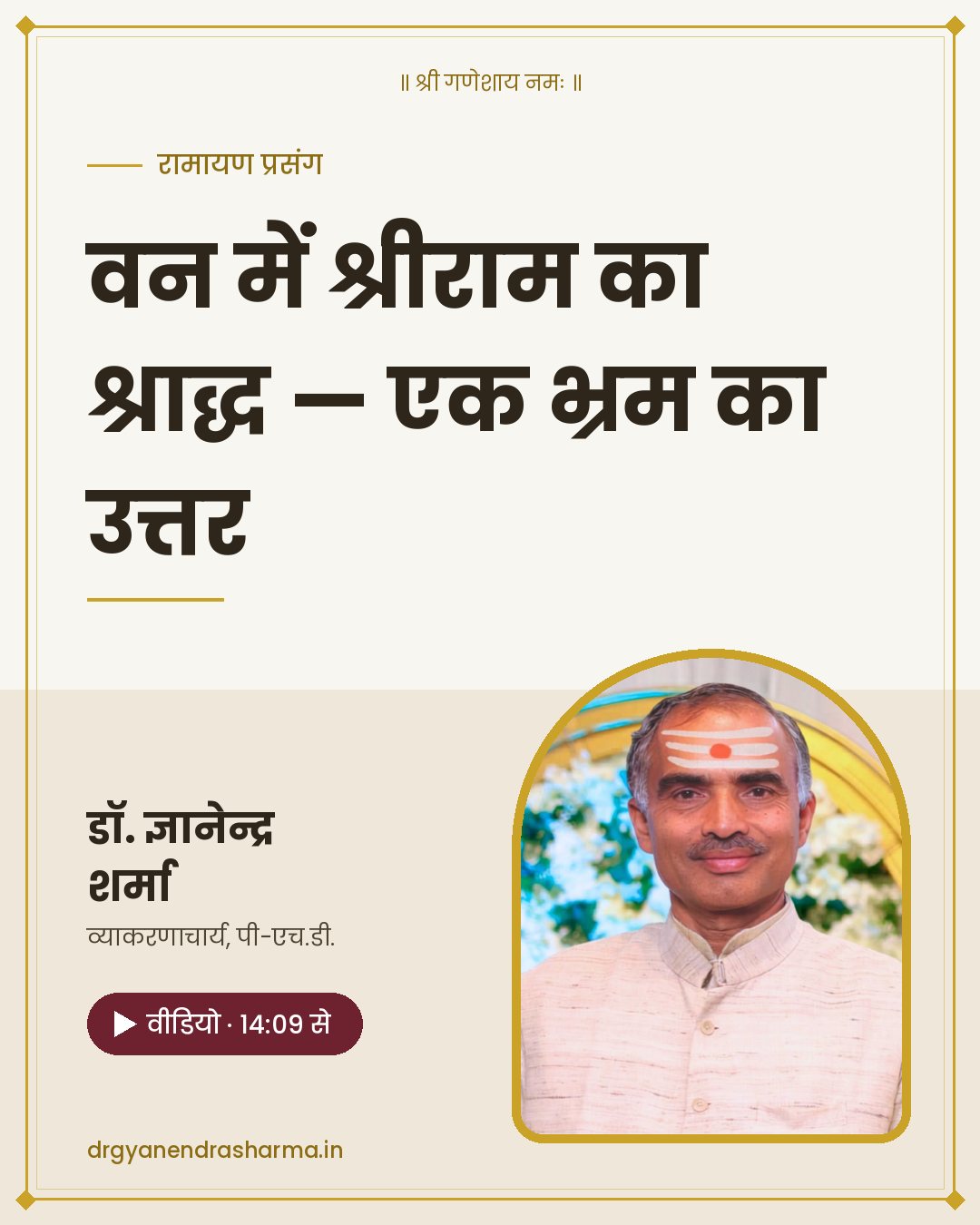
 Video (Hindi) · from 14:09How did Shri Ram perform his father’s Shraddh in the forest? — the truth about the "meat" confusionWatch on YouTube →
Key Takeaways
- Shri Ram made the pindas from jujube (ingudi-badari) fruit
- Urad (masha) is pure in Shraddh — that is where the meaning of "meat" went wrong
- Sita ji stepping out of sight was propriety, not disrespect
- What a person eats is what is offered to his ancestors and devatas
- Nothing beyond one’s means should be used in Shraddh
The question
There was nothing at all in the forest during the exile. So how did Bhagavan Shri Ram perform his father’s Shraddh? And why is it said that he offered pindas of meat?
Where the "meat" confusion came from
Dr. Gyanendra Sharma explains — urad (masha) is very pure in Shraddh. By adding a dot to "masha", people read it as "mamsa" (meat).
He gives an example: if someone loses his sight in the month of Sawan, then even in the hot winds of Jeth everything looks green to him. Whatever one’s nature, one finds that very thing in a word too.
What actually happened
Shri Ram boiled the jujube fruit available in the forest and made pindas from it, and fed the Brahmins with whatever greens and leaves could be found.
Even though Sita ji is Annapurna herself, and Bhagavan is Vishvambhar — who sustains the world. Nothing was beyond their reach. Yet Maryada Purushottam kept propriety and offered only what a forest-dweller would have.
While offering the pinda, Shri Ram says, weeping —
यदन्नः पुरुषो भवति तदन्नास्तस्य देवताः ।
Meaning — whatever food a person eats, that same food belongs to his devatas (and ancestors). At this time this is all I am able to give — please accept it with love.
Why Sita ji stepped out of sight
When the meal had been prepared and the Brahmins came, Sita ji left. Shri Ram and Lakshman ji did the serving. Shri Ram did not like this.
Sita ji gave three reasons —
- In the bodies of the Brahmins I saw your father. When the father-in-law is present, it is against propriety for the daughter-in-law to remain in front.
- In Ayodhya my father-in-law had seen me adorned with every ornament. Seeing me now in bark and leaves, he would have been grieved and unable to eat.
- The food served here was not even the food of servants compared with what was served to Brahmins in Ayodhya.
So it was propriety, not disrespect. And this episode also shows that the ancestors enter the bodies of the Brahmins and receive the food.
What we learn
Dr. Sharma’s conclusion is simple:
- If you are an emperor, perform Shraddh at a king’s level.
- If there is no wealth, do it as Shri Ram did in the forest.
- Nothing beyond your means should be used in Shraddh — not even by taking a loan for show.
This episode is in the Valmiki Ramayana, and also appears in other places, including the Markandeya Purana.
To read about this subject in detail, see Dr. Gyanendra Sharma’s book Pitru-Karm Shraddh-Mimansa, and the complete guide to Pitru Paksha is here.
*Source — this article is based on a video discussion by Dr. Gyanendra Sharma (video link above, in Hindi). The tithi and muhurta of Shraddh change every year — decide them only after checking with your own panchang and family purohit.*
Listen to Dr. Gyanendra Sharma (in Hindi)from 14:09 in the video · on YouTubeLooking for personal guidance? Get your birth chart analysed.
Book a consultationFrequently asked questions
Did Shri Ram perform Shraddh with meat? +
No. According to Dr. Gyanendra Sharma, Shri Ram made pindas from the jujube fruit available in the forest and fed the Brahmins with greens and leaves. The "meat" confusion came from misreading the word "masha" (urad).
Why did Sita ji not come forward at the time of the Shraddh? +
She saw her father-in-law Dashrath ji in the bodies of the Brahmins, and it was against propriety for the daughter-in-law to come before her father-in-law. She also did not want to grieve him with her forest-dweller’s state.
What do we learn from this episode? +
Shraddh is done according to one’s means. At a king’s level if one is a king, and with whatever is available if there are no resources — as Shri Ram did in the forest.
Where does this episode appear? +
It is in the Valmiki Ramayana, and also appears in other texts, including the Markandeya Purana.