 ॐ
AI Summary
Pitru Dosh arises when some wrong is done to one’s parents or elders of the family and their heart is grieved. Pitru Rin is the debt that builds up from not performing Shraddh and tarpan on time — and today it rests on almost everyone. Saying the name and gotra in tarpan is like the address on a letter — without it, the offering does not arrive. If the gotra is not known, the Kashyap gotra is taken. If there is no man in the family, a woman can also perform Shraddh, by the Pauranic method.
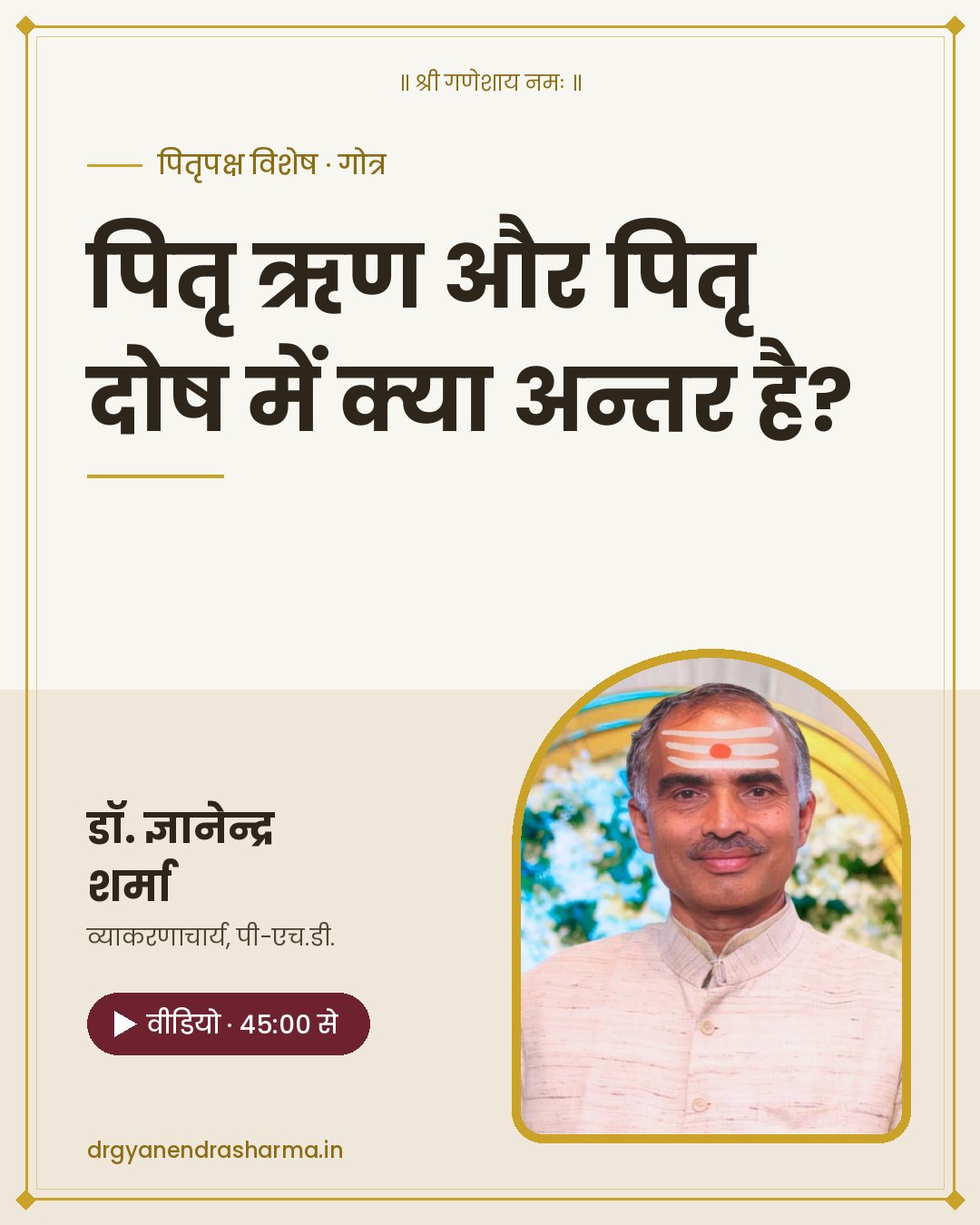
 Video (Hindi) · from 45:00The difference between Pitru Rin and Pitru Dosh — why name and gotra matter, and who can perform ShraddhWatch on YouTube →
Key Takeaways
- Pitru Dosh = a wrong against elders; Pitru Rin = Shraddh and tarpan not done on time
- In the Kali Yuga, Pitru Rin rests on almost everyone
- Name and gotra are like the address on a letter — without them the offering does not arrive
- If the gotra is not known, the Kashyap gotra
- Women and those without yajnopavit can perform Shraddh by the Pauranic method — the fruit is the same
Pitru Dosh and Pitru Rin — two different things
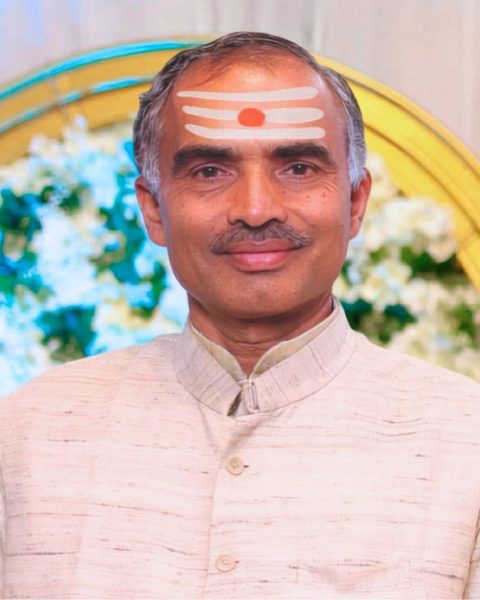
People show their Kundli to an astrologer, hear "Pitru Dosh", and start worrying. Dr. Gyanendra Sharma first makes the difference between the two clear.
| Pitru Dosh | Pitru Rin | |
|---|---|---|
| What it is | Some wrong done to elders such as the mother, father, uncle, brother or maternal grandparents, which grieves their heart | The debt that builds up from not doing the rites of the ancestors — Shraddh, tarpan — on time |
| Shastra | In the Karma-Vipaka Samhita of the Parashara tradition | One of the three debts — to the devas, the rishis and the ancestors |
| On whom | Can be said only after seeing the Kundli | On almost everyone today |
Why a debt builds up
- Deva rin — from not performing yajna and the like
- Rishi rin — from not studying the Veda
- Pitru rin — from not doing the rites of the ancestors on time
Dr. Sharma says that today deva-karya is happening in plenty — katha, Bhagavata, yajna, japa. But pitru-karya is seen very little. So in the Kali Yuga Pitru Rin is with almost every person. And as long as the debt remains, the full fruit of the japa and anushthans one does is not received.
A detailed article on the signs and remedies of Pitru Dosh can be read here.
Why name and gotra are necessary
Dr. Sharma gives a simple example: you sent a money order from Narwar to Mathura or Vrindavan. If it has the name and address, it will arrive. If not, it will come back to you.
In the same way, whatever is given to the ancestors or devatas while saying the name and gotra reaches them directly, in whatever form of life they may be. The shastra says — without a sankalp, every act is fruitless.
If the gotra is not known
Take the Kashyap gotra. All are considered descendants of the rishi Kashyap, so the Kashyap gotra fulfils it.
An interesting episode
Dr. Sharma tells an episode from his family. On the occasion of a shastrartha, a man began mocking tarpan — "Will your water reach the ancestors lakhs of kos away? Offer it in my name — it does not even reach me."
After completing the tarpan, he began saying harsh words, naming that man’s parents. The man grew angry. Then he asked — "Your parents have passed away. When my harsh words reached them, why would the water I offer with name and gotra not reach my ancestors?"
Can women perform Shraddh?
Yes. Everyone has the right to perform Shraddh. If there is no man in the family line, only a woman, the woman can perform it — by the Pauranic method.
If the son is young, or has not had his yajnopavit
One without a yajnopavit can also perform Shraddh:
- Pauranic mantras in place of Vedic mantras
- An angocha (gamchha) in place of the yajnopavit — it is worn in the savya and apasavya positions
This question also comes from abroad — Canada, America. The answer is the same: Shraddh and tarpan can all be done by the Pauranic method, and the fruit of both is the same. There is no shortfall in the fruit.
To read about this subject in detail, see Dr. Gyanendra Sharma’s book Pitru-Karm Shraddh-Mimansa, and the complete guide to Pitru Paksha is here.
*Source — this article is based on a video discussion by Dr. Gyanendra Sharma (video link above, in Hindi). The tithi and muhurta of Shraddh change every year — decide them only after checking with your own panchang and family purohit.*
Listen to Dr. Gyanendra Sharma (in Hindi)from 45:00 in the video · on YouTubeLooking for personal guidance? Get your birth chart analysed.
Book a consultationFrequently asked questions
What is the difference between Pitru Dosh and Pitru Rin? +
Pitru Dosh arises when some wrong is done to one’s parents or elders of the family. Pitru Rin is the debt that builds up from not performing the Shraddh and tarpan of the ancestors on time. According to Dr. Gyanendra Sharma, Pitru Rin rests on almost everyone today.
Why are the name and gotra said in tarpan? +
Just as a money order arrives if it carries the name and address, an offering reaches the ancestors when their name and gotra are said. An act without a sankalp is considered fruitless.
How should tarpan be done if the gotra is not known? +
By taking the Kashyap gotra. All are considered descendants of the rishi Kashyap, so the Kashyap gotra fulfils it.
Can women perform Shraddh? +
Yes. If there is no man in the family line, a woman can perform Shraddh by the Pauranic method.
How can Shraddh be done without a yajnopavit? +
With Pauranic mantras, wearing an angocha (gamchha) in place of the yajnopavit. According to Dr. Sharma its fruit is the same as by the Vedic method.