 ॐ
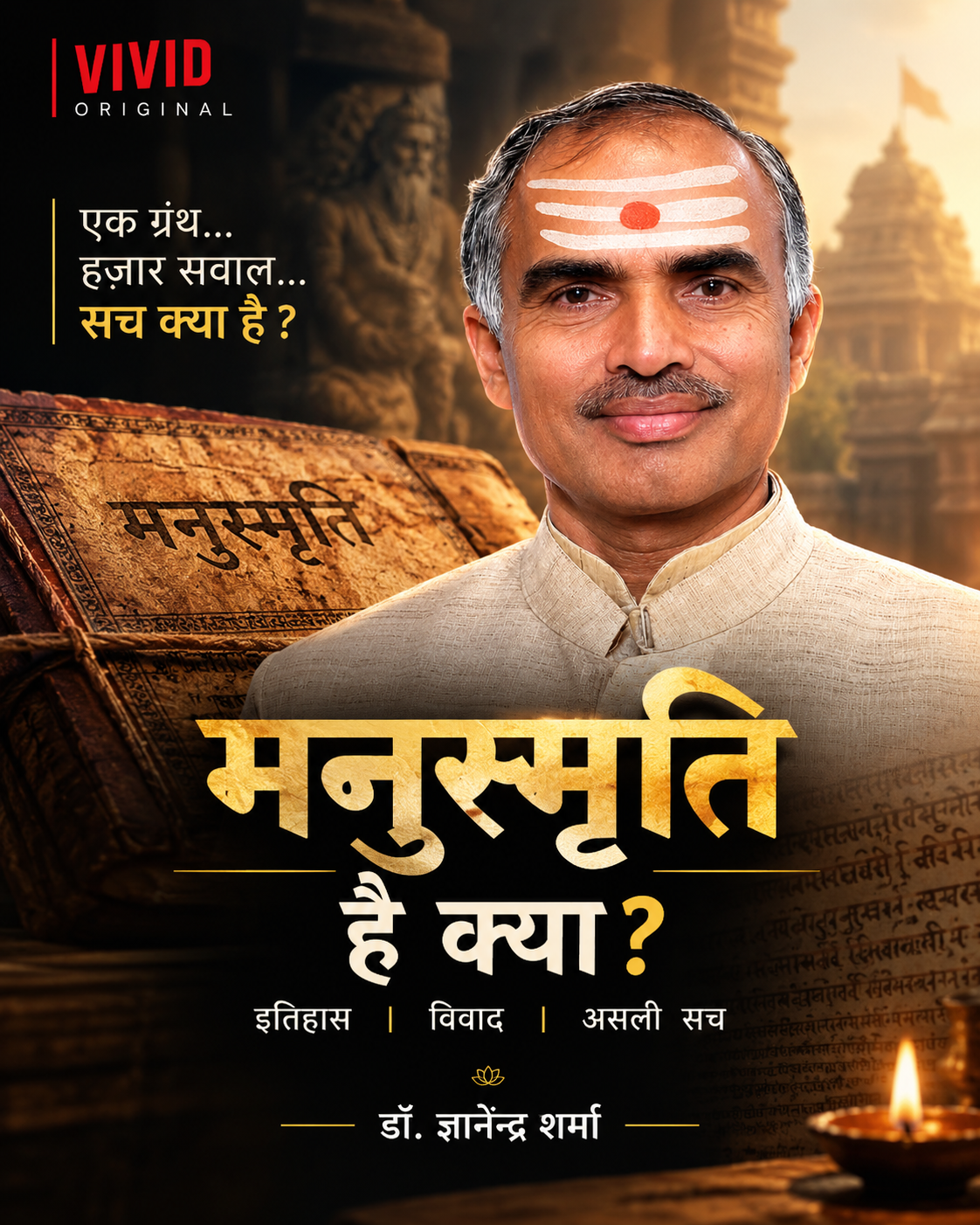
AI Summary
The Manusmriti is a text of the order of dharma in ancient India — just as there is a constitution today, it was the code of conduct of that age. The shastras themselves say that a different smriti is the authority for each yuga, and that in the Kali Yuga the Parashara Smriti is accepted. Controversy arises mostly because people read the original verse without its commentary, cut off from its context.
Key Takeaways
- The Manusmriti is the order of dharma of its age — like today’s constitution.
- The shastras themselves say — in the Kali Yuga the Parashara Smriti is the authority, not the Manusmriti.
- The meaning of a verse comes from its commentary (tika), not from a direct translation of the words.
- The Manusmriti also has verses honouring women — such as "yatra nāryastu pūjyante".
- Controversy usually arises from showing selected verses cut off from their context.
What is the Manusmriti?
Today, as soon as the Manusmriti is mentioned, two sides stand up — one eager to burn it, the other defending its every line. Neither side usually explains what the Manusmriti really is.
The simple answer is this: just as our country today has a constitution by which things are run — in the same way, in ancient times there was a code of conduct given by the rishis and maharishis. The Manusmriti is a code of dharma of that kind. It is not a text of worship, but a shastra of social order.
Does the Manusmriti still apply today?
This is the most important question, and the shastras themselves have answered it.
The shastras clearly say that a different smriti is regarded as the authority for each yuga:
कृते तु मानवा धर्मास्त्रेतायां गौतमाः स्मृताः।
द्वापरे शङ्खलिखिताः कलौ पाराशराः स्मृताः॥
— Parashara Smriti
That is — in the Satya Yuga the dharma of Manu, in the Treta of Gautama, in the Dvapara of Shankha-Likhita, and in the Kali Yuga the Parashara Smriti is the authority.
So the text to be followed as the "constitution" in today’s age is the Parashara Smriti — not the Manusmriti. Both sides should understand this. Those burning it are fighting a text that is not even the law for this age; and those insisting on every line are ignoring the shastra’s own arrangement.
Why does the controversy arise?
There are two reasons, and both are worth understanding.
First — translating the verse directly. In Sanskrit, the meaning of a verse is often not what it appears to be. Every verse comes with a tika — the explanation given by ancient scholars. It tells in what context, for which time and in which situation the words were said. Drawing a meaning without reading the tika is like reading a section of the law and pronouncing judgement without knowing the court’s interpretation.
Second — quoting selectively. Those who want to oppose pick up only the verses of prohibition. They leave out the places where there is praise. The same Manusmriti contains this famous saying:
यत्र नार्यस्तु पूज्यन्ते रमन्ते तत्र देवताः।
— where women are honoured, there the devatas dwell
This too was said by Manu Maharaj. But those who want to spread hatred will never quote it.
The shastra does not discriminate against anyone
Another confusion is spread — that the shastras were written in favour of a particular group. Whereas the basic principle of the shastra is the opposite:
इदं पुण्यमिदं पापमित्येतस्मिन् पदद्वये।
आचाण्डालं मनुष्याणां शास्त्रं समप्रयोजनम्॥
That is — "this is merit, this is sin" — the whole purpose of the shastra lies in just these two words. And this order is given equally for all human beings, without any distinction. Merit is merit for all, sin is sin for all.
So what should an ordinary person do?
- Read the original text with its commentary, or understand it from a qualified scholar
- Before passing judgement on any verse, be sure to look at its context
- Do not go only by social media videos and screenshots — from either side
- Remember that the law for today’s age is that of the Parashara Smriti
The biggest point — insulting a text is just as wrong as insulting a human being under its cover. The basic voice of the Sanatan tradition has always been that the way forward comes from reflection, not from dispute.
Resolve your questions
If you want personal guidance on any episode of the shastras, or on a question related to your Kundli, you can book a consultation. The best way to remove confusion is authentic information.
Looking for personal guidance? Get your birth chart analysed.
Book a consultationFrequently asked questions
Who wrote the Manusmriti? +
According to tradition, it is the order of dharma spoken by Manu Maharaj, later given the form of a text. It is not the work of a single period, but a shastra compiled over a long tradition, on which commentaries by many scholars are also available.
Should the Manusmriti be followed in the Kali Yuga? +
The shastras themselves say that the Parashara Smriti is the authority in the Kali Yuga. The Manusmriti has historical and shastric importance, but for the code of conduct of this age the Parashara Smriti is looked to.
What should be done about the controversial verses of the Manusmriti? +
Before passing judgement on any verse, it is necessary to look at its commentary and context. The word-for-word meaning of a verse is often not its real meaning. Also see for which yuga’s order it was said.
Do the shastras insult women? +
No. The same Manusmriti contains sayings such as "yatra nāryastu pūjyante ramante tatra devatāḥ" — where women are honoured, there the devatas dwell. Showing only the verses of prohibition and leaving out those of praise is what causes confusion.