 ॐ
AI Summary
The shastra says that any japa, tapas, giving or anushthan is considered complete only with the consent of the family guru and family purohit. If they are far away, remember them in your mind, take their permission as given, and begin the giving. The permission of the elder brother and parents has the same place at home. If there is no purohit, choose a virtuous Brahmin as purohit, as the Pandavas did.
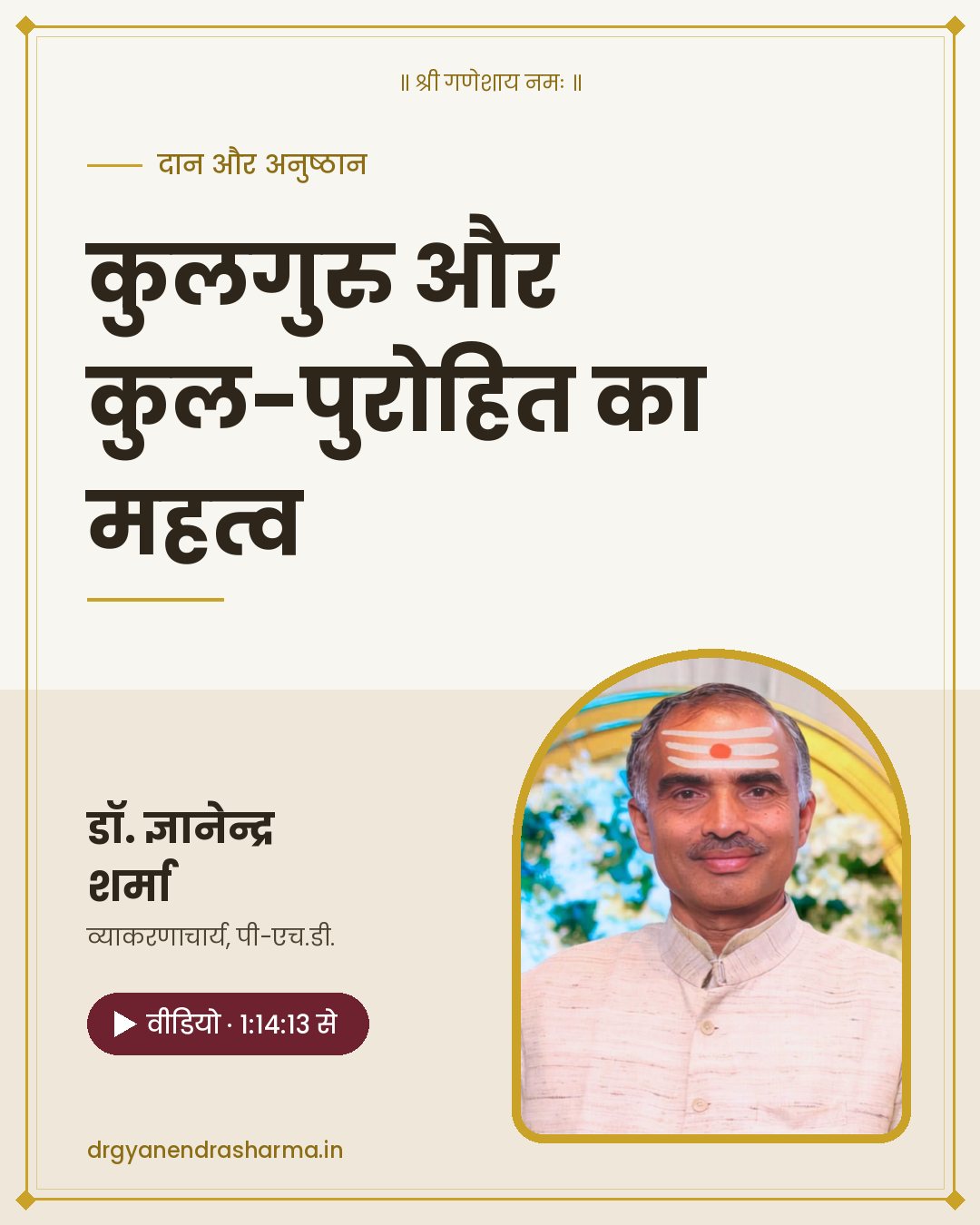
 Video (Hindi) · from 1:14:13The importance of the family guru and family purohit — why giving and rituals are incomplete without their consentWatch on YouTube →
Key Takeaways
- A ritual is considered complete only with the consent of the family guru and purohit
- If they are far away, remember them in your mind and begin
- For a younger brother, the elder brother’s permission has the same place
- According to Markandeya ji, the purohit is mother, father and friend
- If there is no purohit, choose a virtuous Brahmin as purohit
Why it is necessary
At the end of the conversation Dr. Gyanendra Sharma lays special stress on one point:
If you are performing Shraddh, japa, tapas or an anushthan, and have not taken the consent of the family guru or family purohit, it can go in vain.
You may recite the Samhita, be an Agnihotri, be a tapasvi — even with all that, if consent was not taken from them, the fruit of the giving is not received.
The remedy is very simple: ask them once — "we wish to give this daan" — and have them say it. That is all.
If they live far away
This is the most common difficulty. The shastra gives a remedy for this too —
Whether they are far, or very far — remember them in your mind, take their permission as given, and then begin the giving.
The place of elders at home
The same rule applies at home. These days the younger brother becomes well-off and keeps doing his own japa, tapas and anushthans — asking neither his parents nor his elder brother.
The shastra says that without the elder brother’s permission the younger brother should not perform agnihotra, Veda recitation, japa, tapas or anushthan.
What a purohit should be
Markandeya ji says — the purohit is mother, father, son and friend. This feeling towards the purohit should always remain.
And if you find a Brahmin rich in learning and tapas and feed him, even the greatest sorrow is removed.
If there is no purohit
If, even after repeated effort, no family guru or family purohit can be found, choose a virtuous Brahmin and make him your purohit.
The shastras give examples of this — the Pandavas chose the rishi Dhaumya as their purohit, and King Sharyati also chose a purohit in the same way.
Dr. Sharma’s conclusion is — without a family guru and without a purohit, no rite is complete.
*Source — this article is based on a video discussion by Dr. Gyanendra Sharma (video link above, in Hindi). The tithi and muhurta of Shraddh change every year — decide them only after checking with your own panchang and family purohit.*
Listen to Dr. Gyanendra Sharma (in Hindi)from 1:14:13 in the video · on YouTubeLooking for personal guidance? Get your birth chart analysed.
Book a consultationFrequently asked questions
Why is the family guru’s consent necessary? +
According to Dr. Gyanendra Sharma, the shastra says that japa, giving or an anushthan does not bear full fruit without the consent of the family guru or family purohit — however qualified the performer may be.
What should be done if the family guru lives far away? +
Remember him in your mind, take his permission as given, and begin the giving or anushthan. This is the remedy given in the shastras.
What should be done if there is no purohit? +
Choose a virtuous Brahmin and make him your purohit — as the Pandavas chose the rishi Dhaumya and King Sharyati chose a purohit.
Is the permission of elders at home also necessary? +
Yes. The shastra says the younger brother should not do japa, tapas or anushthan without the elder brother’s permission. The consent of parents and elders has the same place.