 ॐ
AI Summary
The shastra says that Bhagavan gave human beings intellect, mind, senses and life-breath so that they could reach him through dharma, artha, kama and moksha — which is why human life is the most precious. Joy and sorrow, gain and loss come and go in turn; the steady person is not swept away by them. The shastra draws a great distinction between death by accident and ending one’s life. If you or someone close to you is going through a hard time, please talk to someone — in India, free help is available at Tele-MANAS (14416).
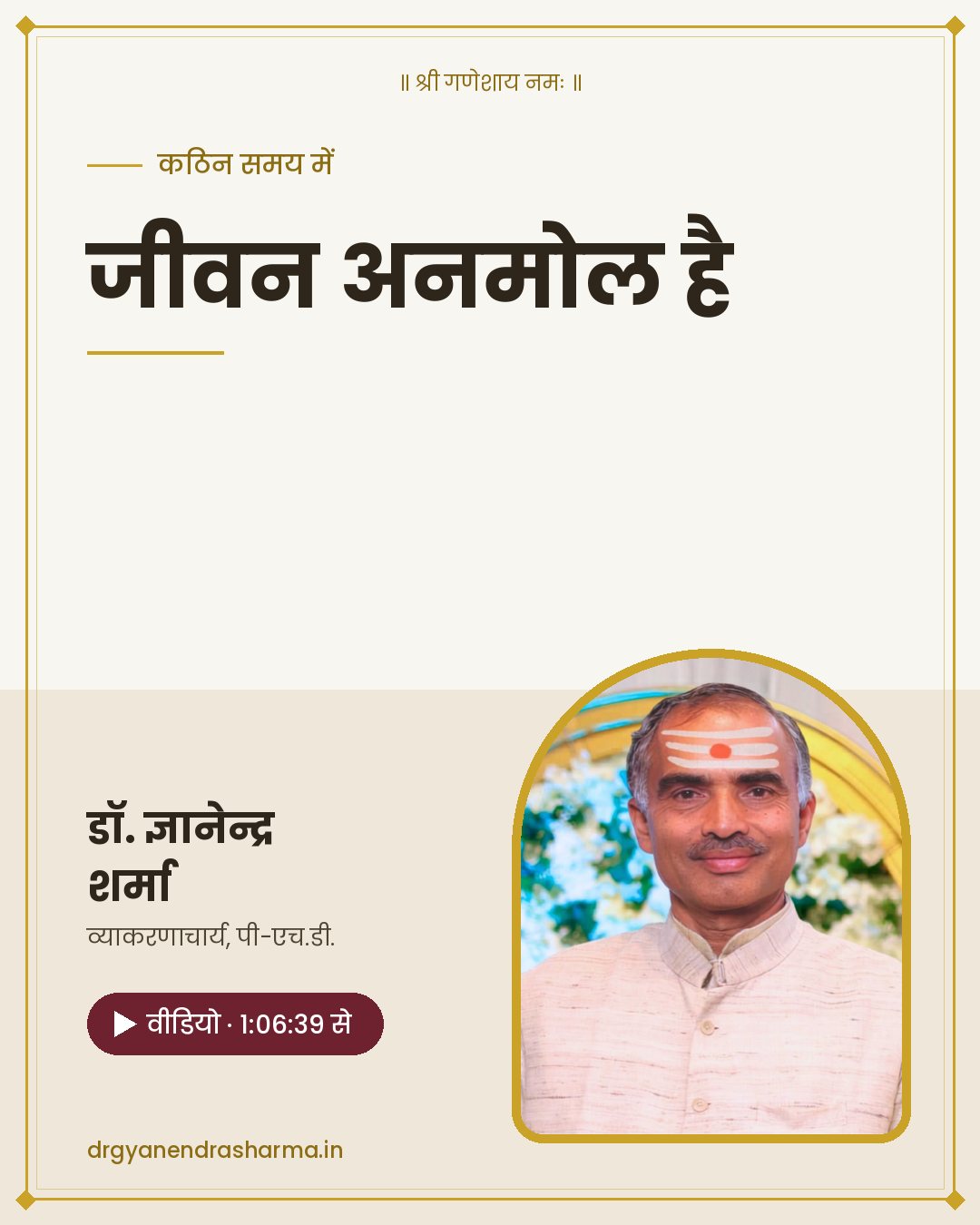
 Video (Hindi) · from 1:06:39Life is precious — what the shastras say in hard timesWatch on YouTube →
Key Takeaways
- Human life is the means to reach Bhagavan — that is why it is precious
- Joy and sorrow, gain and loss come and go in turn
- Death by accident happens through prarabdha — its Shraddh is on Chaturdashi
- A decision taken in anger, pride or agitation should never be final
- In hard times, talk to someone — in India, Tele-MANAS 14416
If you or someone close to you is going through a very hard time right now, do not stay alone. Talk to someone you trust, or in India call Tele-MANAS: 14416 (or 1-800-891-4416) — a free, 24-hour support service of the Government of India. If you are outside India, please contact your local emergency number or a crisis helpline in your country.
Why this subject
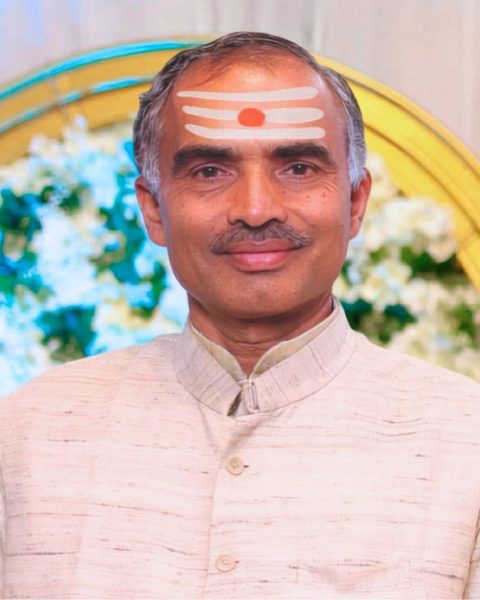
Dr. Gyanendra Sharma pauses on this especially in the conversation. He says that incidents of people ending their lives over small things are increasing — a mother scolded her daughter instead of her son, refused a mobile phone, husband and wife had an argument.
He says — this should be told in every home.
Why life is so valuable
Bhagavan says that after creation he told the jiva — "If you wish to reach me, you can do so only through the human body." For this he gave intellect, mind, senses and life-breath, so that a human being could reach him through dharma, artha, kama and moksha.
That is, human life is no ordinary thing — it is an opportunity received with great difficulty. That is why the shastra regards taking one’s own life as very grave.
Joy and sorrow come and go
Dr. Sharma recalls this verse —
सुखं च दुःखं च भवाभवौ च लाभालाभौ मरणं जीवितं च ।
पर्यायशः सर्वमेते स्पृशन्ति तस्माद्धीरो न च हृष्येन्न शोचेत् ॥
Meaning — joy and sorrow, being and not being, gain and loss, death and life — all these touch everyone in turn. So the steady person neither rejoices too much in them nor grieves.
The sorrow of today is not permanent. Just as joy went away, sorrow too will go.
A decision made in agitation should not be final
The shastra explains that such decisions are usually made in a moment of excessive pride, excessive anger, excessive attachment or fear — a small hurt, and the mind breaks.
So the rule is simple: do not take any big decision in a moment of anger or sorrow. Let that moment pass, and talk to someone.
Accident and prarabdha
Dr. Sharma also makes a distinction clear, one that matters to grieving families:
A heart attack, an accident, drowning, fire — such sudden death happens only when the lifespan set by prarabdha is complete. The shastra says —
आयुः कर्म च वित्तं च विद्या निधनमेव च ।
पञ्चैतान्यपि सृज्यन्ते गर्भस्थस्यैव देहिनः ॥
Meaning — lifespan, karma, wealth, learning and death — these five are decided while one is still in the womb.
The Shraddh for such a death is performed on Chaturdashi. In any difficult situation, decide about the Shraddh only after asking your family purohit.
What to do at home
- Talk every day to children and elders — listen before you scold
- If you see sadness, silence, or things like "nothing feels good" in someone, do not take it lightly
- If needed, do not hesitate to seek help from a doctor or counsellor — this too is dharma
Help: In India, Tele-MANAS — 14416 or 1-800-891-4416 · free · 24 hours · in many languages. Outside India, please contact your local emergency number or crisis helpline.
*Source — this article is based on a video discussion by Dr. Gyanendra Sharma (video link above, in Hindi). It does not replace medical or psychological advice.*
Listen to Dr. Gyanendra Sharma (in Hindi)from 1:06:39 in the video · on YouTubeLooking for personal guidance? Get your birth chart analysed.
Book a consultationFrequently asked questions
Why do the shastras consider human life so valuable? +
Because Bhagavan gave human beings intellect, mind, senses and life-breath so that they could reach him through dharma, artha, kama and moksha. The human body is the very opportunity through which Bhagavan can be reached.
How can one keep patience in hard times? +
The shastra says that joy and sorrow, gain and loss, life and death touch everyone in turn, so the steady person is not swept away by them. Do not take any big decision in a moment of anger or sorrow, and talk to someone.
When should the Shraddh for a death in an accident be done? +
On Chaturdashi. According to Dr. Gyanendra Sharma, sudden death happens when the lifespan set by prarabdha is complete. Decide after asking your family purohit.
Where can help be found in mental difficulty? +
In India, at the Government of India’s Tele-MANAS service — 14416 or 1-800-891-4416. It is free and runs 24 hours. Outside India, please contact your local emergency number or a crisis helpline.